Good practice is to always be prepared.
It is good practice to prepare for the worst, yet ready for the rest. You never know what will happen, so it becomes a constant battle to shoot for the best and be the best in whatever it is that we do. For example, to predict how sales will go for the next year, you read the trend that is being set this year, as well as previous years. For the months where sales are down, use additional promotions, advertising, and any other marketing strategies in order to drive up sales. For the months where sales are up, restock items and maintain good inventory to make sure back-orders are prevented as much as possible.
Being prepared also means a well-trained staff. Knowledge of new items, inventory, pricing shifts as well as upcoming specials and discounts will play a big part to promote and increase sales. Employees who would have to physically check stock every single time an item is being asked for availability becomes an inefficient process that utilizes unnecessary manpower for something that could be simply tracked beforehand. Although this may not always be true, always have a fast and efficient way to track inventory, either by maintaining a well-written tracking sheet, or having a planned-out method of communicating with the warehousing staff.
Lack of preparation often leads to disaster once adversity strikes. While it is not possible to prepare for all, it is possible to always have a plan to deal with adversity when it happens. From experience we are able to learn from our mistakes, and prepare for future occurrences of the past events. There is always time to prepare, and the sooner the better. So, start formulating today!
Monday, September 12, 2011

Thursday, September 8, 2011
Futon - From Japan to America
The word futon derived from the Japanese meaning of a bundle of materials wrapped with cloth. Traditionally, futon in Japan is used as a sleep on mattress (shikibuton), comforter (kakebuton), as well as meditation thin square cushion (zabuton). The thickness tends to be thin for space-saving reasons, in order to put the nightly-used sleep accessories away during the day-time.
Futons in the US typically means the convertible frame that alternates from a couch/chair into a bed. Ranges in sizes from chair (27" wide) to queen (80" wide) sizes. Often made with solid hardwood, although metal frames are also a popular selection. Similarly, the futons in the US are also designed for space-saving. Most popular in smaller apartments, or shared homes. One of the favorites for college students. The typical futons come in 3 separate parts, the frame, the mattress and the futon cover.
Futon Frame:
Usually comes in solid wood, is the foundation of the futon. The unique design allows the futon to interchange between it's upright couch position and flat bed position. Most designs also comes with a lounger position, which is slightly tilted making it a bit lower than the upright position. There are two main categories that describes the positional design of the frame; A-frames (aka Tri-Folds) and Bi-Folds.
 Like the names suggest, the "A-Frame" bends into an A-shape in it's upright position. Usually comes in 3 positions which includes the standard upright position, the flat bed position, and lastly the lounger position. The lounger position in an A-Frame is different from the Bi-Folds. In the A-Frame's lounger position, your legs are supported rather than just hanging off the front of the futon.

The Bi-Fold is the more recognized model design of the futon frames. The "Bi" refers to the "Two" folds that the frame goes under when it is in its upright position; first fold is where you sit on, second fold is the back support. A typical bi-fold frame has stoppers on the bottom to lock the frame in its many positions. The two main "locked" positions are the upright as well as the bi-fold's version of the lounger position. Not to be confused with the A-Frame's version of the "Lounger Position," the Bi-Fold's version is really just a slanted upright position to allow the back to fully rest on the futon mattress as you sit back.

In Mid-2008, Yan's introduced the new Loveseat Lounger Pull-out option for the Bi-Folds, which allows the A-Frame's more comfortable lounger position to be used on a Bi-Fold Frame. The pull-out option allows a third fold (on the frame) to be pulled out, extending the frame to provide a leg support.
Futon Mattress:
Built for comfort, and designed to bend yet holds it upright shape. Most futon mattresses used for the upright futon frames are in between 8"-12" thick. Usually stuffed with a mix of cotton blend and foam, whereas newer designs include visco, inner-springs, wool and poly-blends as well.
For Bi-Folds, a typical suggested futon mattress has to be 8" thick or more. Due to the upright position that the Bi-Folds hold, a thinner futon would simply not hold up its shape. While sitting on the Bi-Fold, depending on its main usage-purpose, different cares may be used. When mostly used as an upright couch or lounger position, the futon mattress should be turned 180 degrees (swapping the seat section with the back) every 3-4 weeks. When mostly used as both flat bed and upright positions, in addition to the 180 degrees turns, you should also flip the futon (back to front) every other month*.
For A-Frames, suggested futon mattress is from 3" up to 6" thick. Unless the upright-chair position is not used, anything thicker than 6" would not layover across the top of an A-Frame (thus the back sticks out). The typical A-Frame futon is mainly cotton-blend materials, or a wool mixed with cotton blend. Due to the limit on the thickness of the mattress, it is a less-popular design for a standard home use. Yet, due to the lower costs and the versatility, along with the third lounger position the frame offers, it is typically the most popular among college students.
*This method does not work for our ComFourPedic selection due to the visco topper is one-sided. 180 degrees turns will be enough for the ComFourPedic selection.
Futon Covers:
Nothing completes the futon like its cover. The cover brings out the unique fashion of the futon, personalizes the furniture to fit in any setting. Selections usually comes in two main categories, solid or printed design. A Yan's original design features a print-in-lay option, which is a canvas design to fit the compact Japanese fabrics into the wider futon mattress covers.

Solid covers are single color, plain covers that uses both 100% cotton material, or micro-fiber suede. Additional selections includes the vinyl fabric, as well as poly-blended materials.

Printed fabrics are split into two main categories, Japanese or Domestic US prints. The traditional Japanese prints uses a higher thread count cotton fabric, gives a more silky smooth feel to the cover. Whereas the domestic prints uses a more upholstery material that tends to be stronger and thicker cotton blend which is typically better suited in homes with pets.
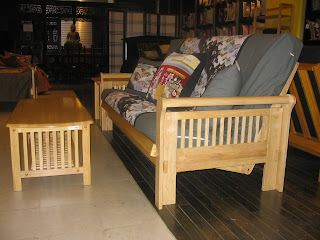
Solid with print in-lay design was first introduced by Yan's (at the time known as Miwa Futon) back in 1991. The design featured a 3 fabric-selection option. Main selection is the printed fabric that is the center-piece of the entire design. The piping and border fabrics that follow accent the printed fabric and brings out an unique design that personalizes the cover. This design was to allow the more compacted Japan-imported fabric to fit into the wide 6'-7' bi-fold futons.
Lastly, there is the 2-sided feature, that either uses a print/solid design, double solid design or double printed design. The 2 sides allows variety in the cover design of the futon. Being able to use either side, the cover gives a 2-for-1 deal.


In addition to the cover designs listed above, custom designs are also available for the customer's choosing. Be unique, be creative and create your own signature design!
For a complete list of our Fabrics and Accessories, check HERE.
Futons in the US typically means the convertible frame that alternates from a couch/chair into a bed. Ranges in sizes from chair (27" wide) to queen (80" wide) sizes. Often made with solid hardwood, although metal frames are also a popular selection. Similarly, the futons in the US are also designed for space-saving. Most popular in smaller apartments, or shared homes. One of the favorites for college students. The typical futons come in 3 separate parts, the frame, the mattress and the futon cover.
Futon Frame:
Usually comes in solid wood, is the foundation of the futon. The unique design allows the futon to interchange between it's upright couch position and flat bed position. Most designs also comes with a lounger position, which is slightly tilted making it a bit lower than the upright position. There are two main categories that describes the positional design of the frame; A-frames (aka Tri-Folds) and Bi-Folds.


The Bi-Fold is the more recognized model design of the futon frames. The "Bi" refers to the "Two" folds that the frame goes under when it is in its upright position; first fold is where you sit on, second fold is the back support. A typical bi-fold frame has stoppers on the bottom to lock the frame in its many positions. The two main "locked" positions are the upright as well as the bi-fold's version of the lounger position. Not to be confused with the A-Frame's version of the "Lounger Position," the Bi-Fold's version is really just a slanted upright position to allow the back to fully rest on the futon mattress as you sit back.

In Mid-2008, Yan's introduced the new Loveseat Lounger Pull-out option for the Bi-Folds, which allows the A-Frame's more comfortable lounger position to be used on a Bi-Fold Frame. The pull-out option allows a third fold (on the frame) to be pulled out, extending the frame to provide a leg support.
Futon Mattress:
Built for comfort, and designed to bend yet holds it upright shape. Most futon mattresses used for the upright futon frames are in between 8"-12" thick. Usually stuffed with a mix of cotton blend and foam, whereas newer designs include visco, inner-springs, wool and poly-blends as well.
For Bi-Folds, a typical suggested futon mattress has to be 8" thick or more. Due to the upright position that the Bi-Folds hold, a thinner futon would simply not hold up its shape. While sitting on the Bi-Fold, depending on its main usage-purpose, different cares may be used. When mostly used as an upright couch or lounger position, the futon mattress should be turned 180 degrees (swapping the seat section with the back) every 3-4 weeks. When mostly used as both flat bed and upright positions, in addition to the 180 degrees turns, you should also flip the futon (back to front) every other month*.
For A-Frames, suggested futon mattress is from 3" up to 6" thick. Unless the upright-chair position is not used, anything thicker than 6" would not layover across the top of an A-Frame (thus the back sticks out). The typical A-Frame futon is mainly cotton-blend materials, or a wool mixed with cotton blend. Due to the limit on the thickness of the mattress, it is a less-popular design for a standard home use. Yet, due to the lower costs and the versatility, along with the third lounger position the frame offers, it is typically the most popular among college students.
*This method does not work for our ComFourPedic selection due to the visco topper is one-sided. 180 degrees turns will be enough for the ComFourPedic selection.
Futon Covers:
Nothing completes the futon like its cover. The cover brings out the unique fashion of the futon, personalizes the furniture to fit in any setting. Selections usually comes in two main categories, solid or printed design. A Yan's original design features a print-in-lay option, which is a canvas design to fit the compact Japanese fabrics into the wider futon mattress covers.

Solid covers are single color, plain covers that uses both 100% cotton material, or micro-fiber suede. Additional selections includes the vinyl fabric, as well as poly-blended materials.

Printed fabrics are split into two main categories, Japanese or Domestic US prints. The traditional Japanese prints uses a higher thread count cotton fabric, gives a more silky smooth feel to the cover. Whereas the domestic prints uses a more upholstery material that tends to be stronger and thicker cotton blend which is typically better suited in homes with pets.

Solid with print in-lay design was first introduced by Yan's (at the time known as Miwa Futon) back in 1991. The design featured a 3 fabric-selection option. Main selection is the printed fabric that is the center-piece of the entire design. The piping and border fabrics that follow accent the printed fabric and brings out an unique design that personalizes the cover. This design was to allow the more compacted Japan-imported fabric to fit into the wide 6'-7' bi-fold futons.
Lastly, there is the 2-sided feature, that either uses a print/solid design, double solid design or double printed design. The 2 sides allows variety in the cover design of the futon. Being able to use either side, the cover gives a 2-for-1 deal.


In addition to the cover designs listed above, custom designs are also available for the customer's choosing. Be unique, be creative and create your own signature design!
For a complete list of our Fabrics and Accessories, check HERE.
Thursday, September 1, 2011
Accessories
Futons and beds look nice by themselves, but nothing will breathe life into a room like accessories. They are the lamps and plants, the pillows and duvet sets, the sheets and covers that accent the masterpieces behind them.
Many showrooms that I have seen are bland, and simple. These rooms are suppose to tell a story as your customers walk by.
The story of a boy, sitting in the living room with his sister watching Disney movies together.
The story of the lady, resting on the futon after falling asleep to her favorite late-night talk show.
With that picture in mind, now ask yourself, do you see it in your store?
Some stores may be missing pillows, some may be lamps, some may not have anything that accents their main presentation. The key thing is, accessories accents the room, and gives customer a more clearer image of what they could have in their home.
To check out our selections of accessories, Click HERE.
Many showrooms that I have seen are bland, and simple. These rooms are suppose to tell a story as your customers walk by.
The story of a boy, sitting in the living room with his sister watching Disney movies together.
The story of the lady, resting on the futon after falling asleep to her favorite late-night talk show.
With that picture in mind, now ask yourself, do you see it in your store?
Some stores may be missing pillows, some may be lamps, some may not have anything that accents their main presentation. The key thing is, accessories accents the room, and gives customer a more clearer image of what they could have in their home.
To check out our selections of accessories, Click HERE.
Wednesday, August 31, 2011
First
Just a post to get things going.
Currently Yan's International Inc. is located in Union City, CA. We manufacture futon, beddings and Japanese style home use furnishing items. (Visit our WEBSITE to view our catalog)
This blog will be used mainly for any updates whether if it is a business specific, or industry specific topics.
Quick tips for independent retailers:
Currently Yan's International Inc. is located in Union City, CA. We manufacture futon, beddings and Japanese style home use furnishing items. (Visit our WEBSITE to view our catalog)
This blog will be used mainly for any updates whether if it is a business specific, or industry specific topics.
Quick tips for independent retailers:
- Maintain online presence. Whether if it is through social networking or website.
- Develop trained staff in order for them to educate customers in better understanding the materials used, operation, as well as being able to understand the construction of the product.
- Always suggest, never sell. Provide genuine and sincere suggestions based on customer desire. Main thing is to allow the decision made come entirely from the customers.
- Maintain high energy in the workplace. Emotions are expressed and passed on to customers. A happy sales will induce a happy customer!
Be sure to also check out our Facebook Page and Follow Us on Twitter!
Subscribe to:
Posts (Atom)